Note
PMA Part-02
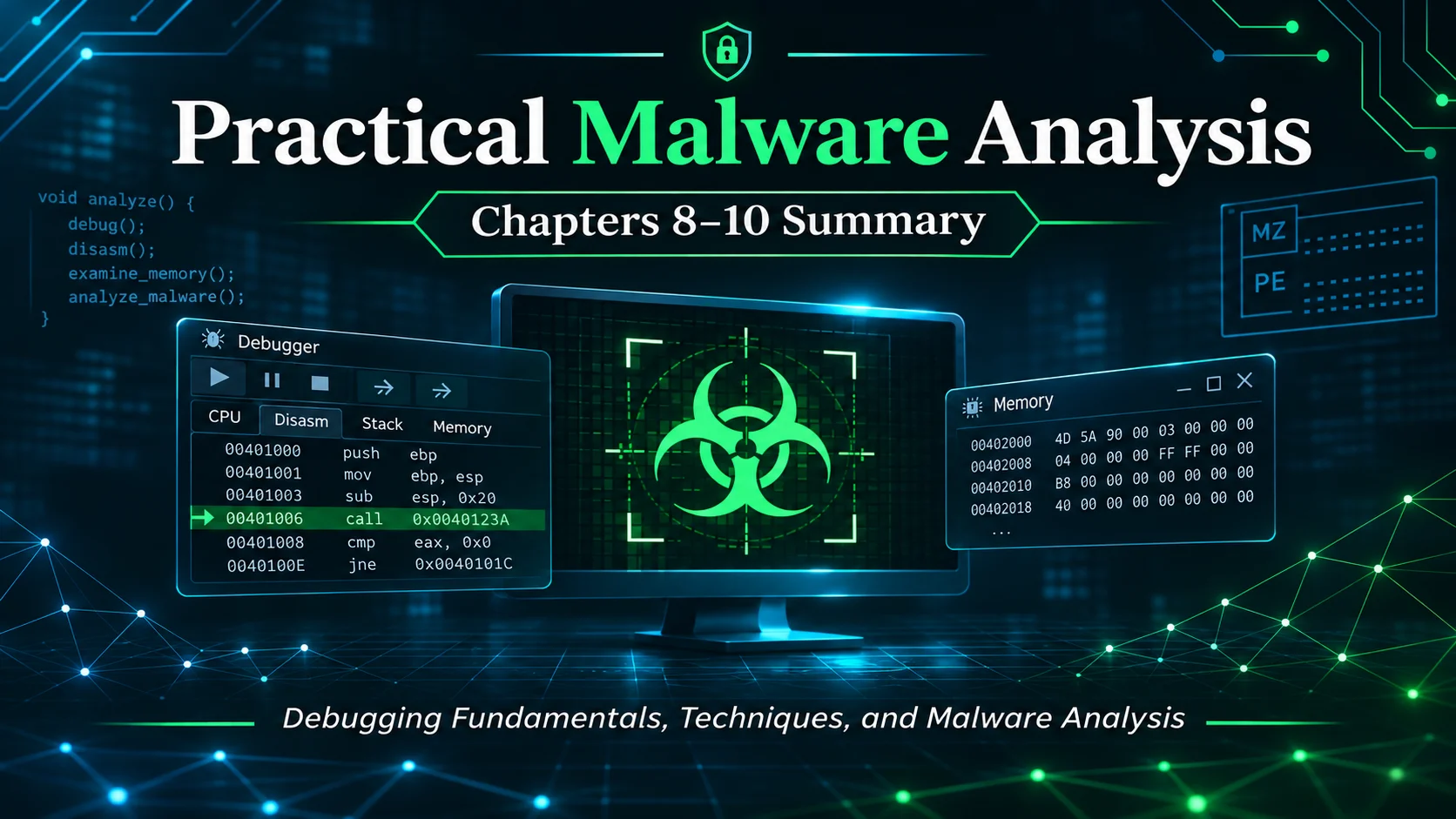
Chapters 8–10 of Practical Malware Analysis (PMA), covering debugging fundamentals, techniques, and hands-on malware analysis using debuggers.
Small discoveries, useful commands, and practical observations from the forensic notebook.
Chapters 8–10 of Practical Malware Analysis (PMA), covering debugging fundamentals, techniques, and hands-on malware analysis using debuggers.
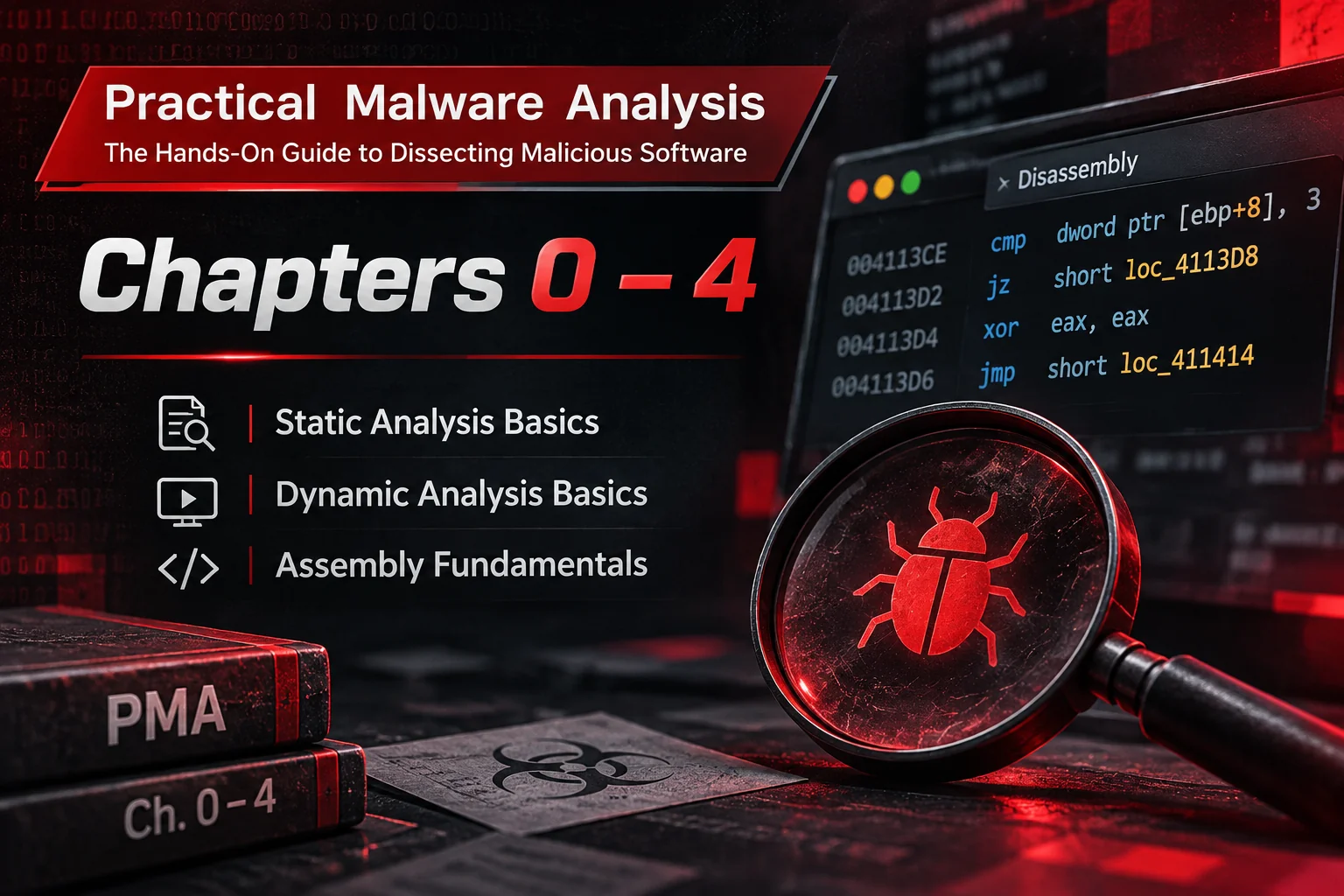
Chapters 0–4 of *Practical Malware Analysis (PMA)*. Along the way, we covered the basics of static and dynamic analysis, as well as some fundamental assembly instructions.
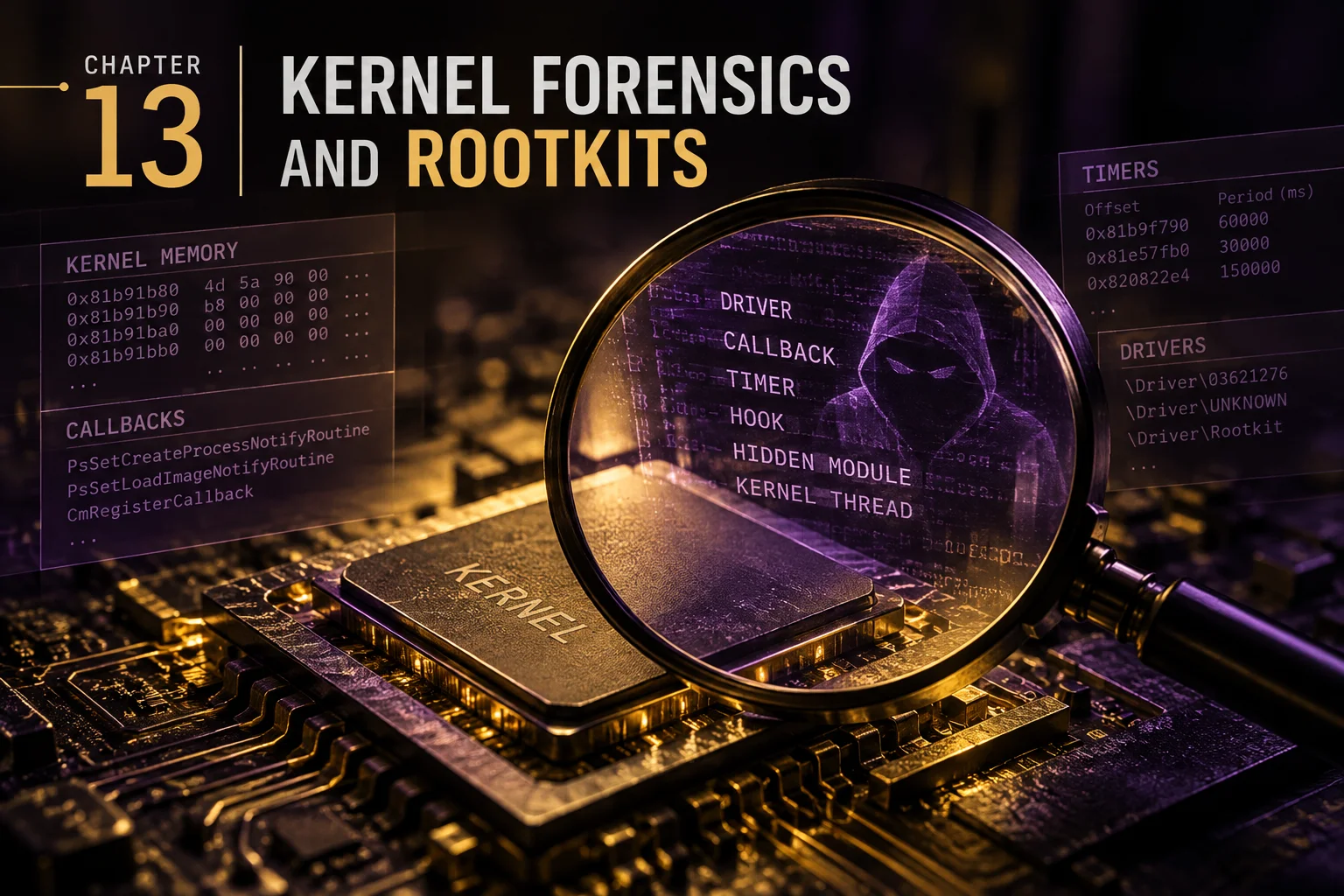
Explores Windows kernel forensics and rootkit detection using Volatility, covering hidden drivers, IRP and SSDT hooking, device trees, kernel callbacks, timers, and memory-based malware analysis.
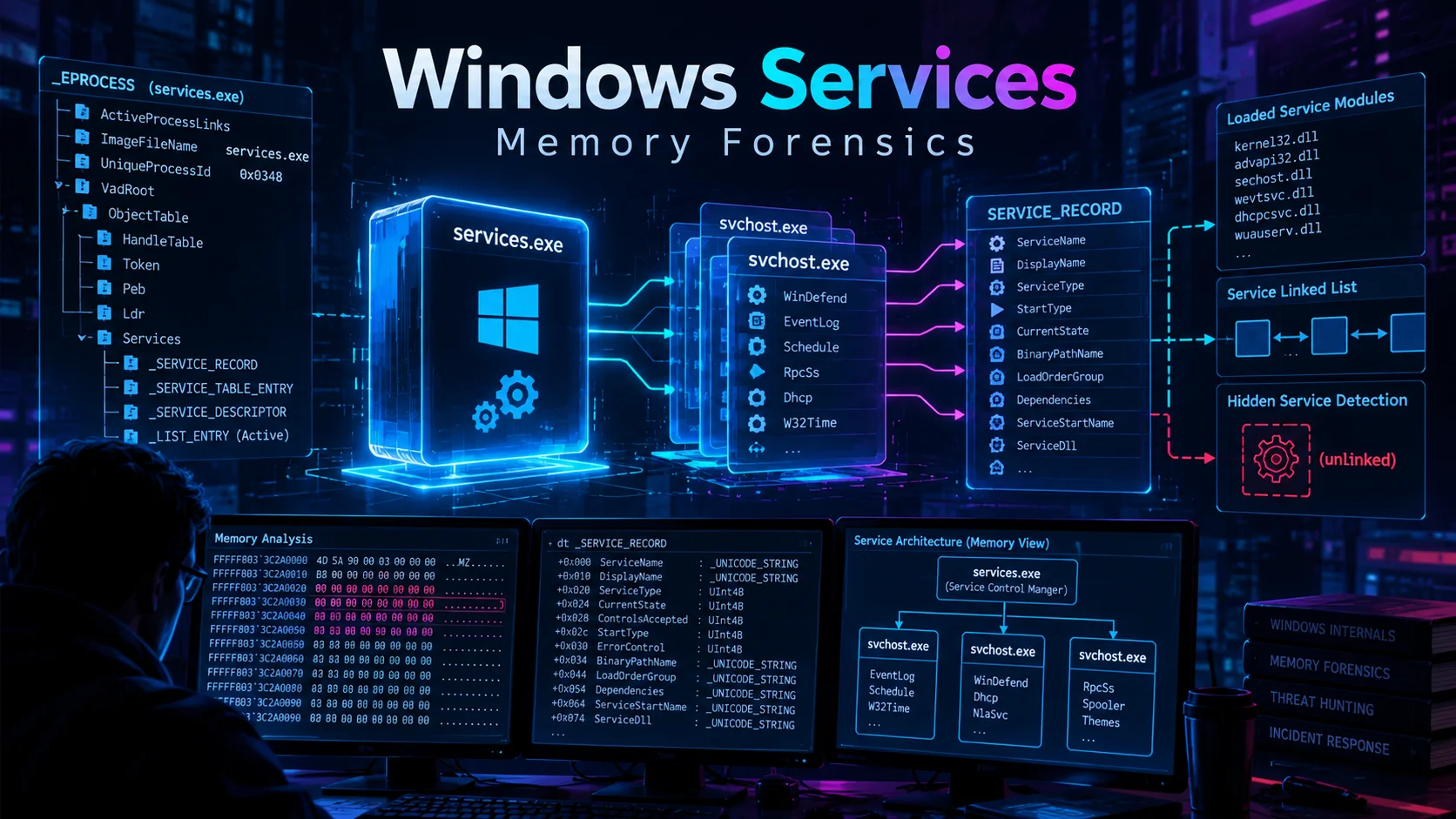
Explores Windows service forensics using Volatility, covering the SCM, service persistence, registry artifacts, service hijacking, and hidden service detection.
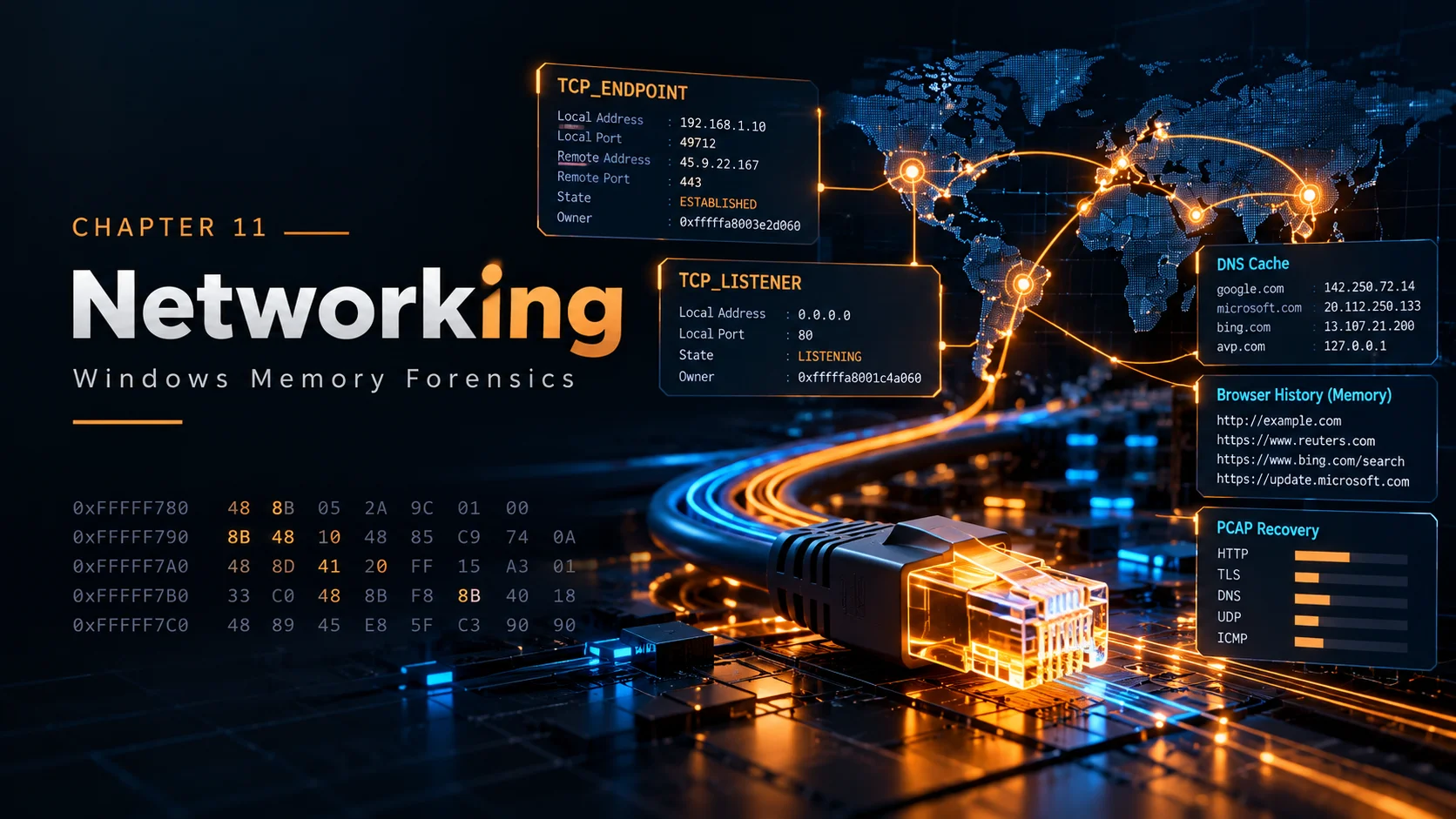
Explores Windows network forensics using Volatility, covering TCP/IP structures, network connections, hidden activity, DNS cache, browser history and packet recovery
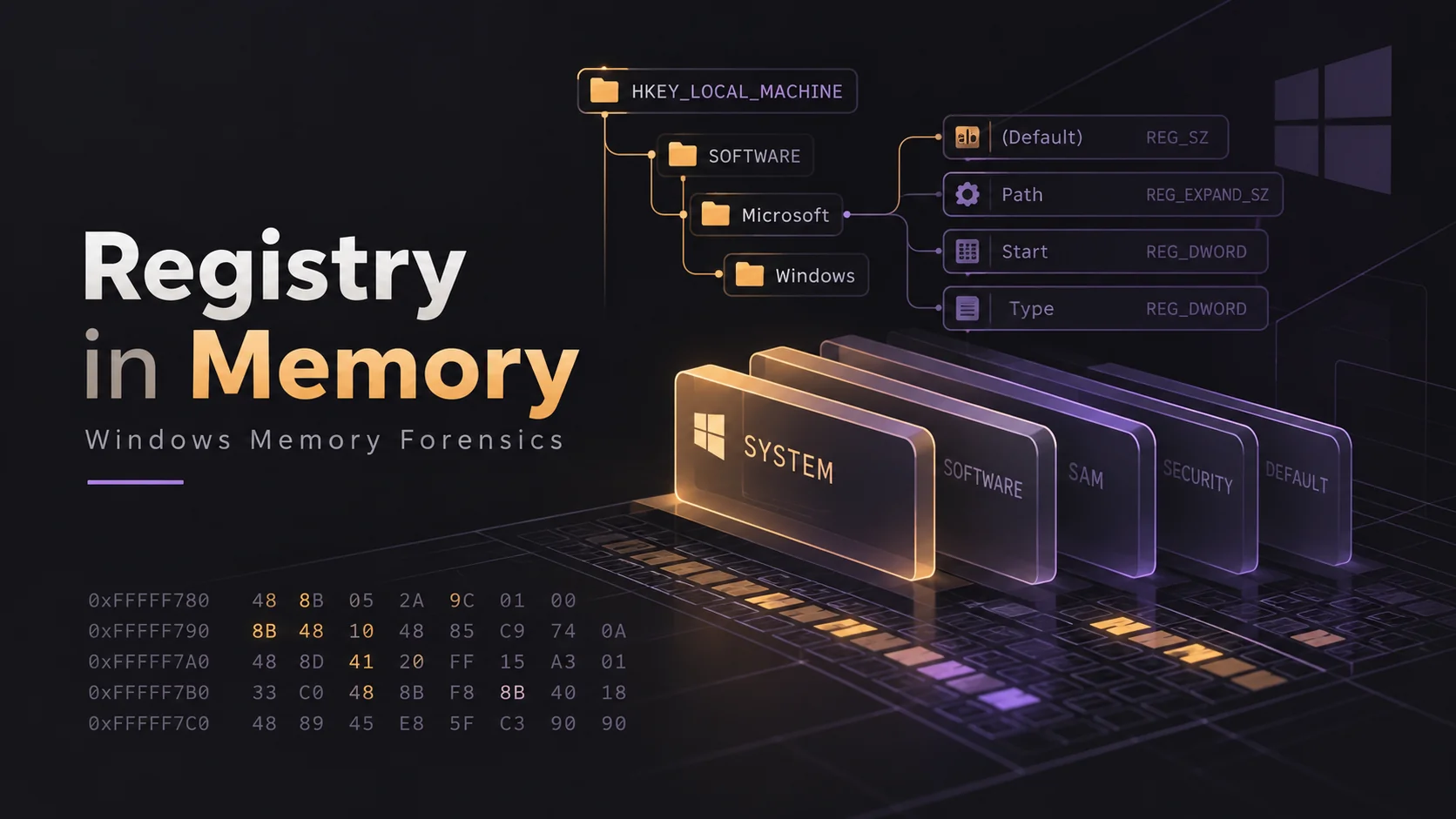
Explores Windows Registry forensics in memory, covering registry hives, Volatility plugins, UserAssist, Shimcache, ShellBags, password hashes, and LSA secrets for malware detection and activity reconstruction.
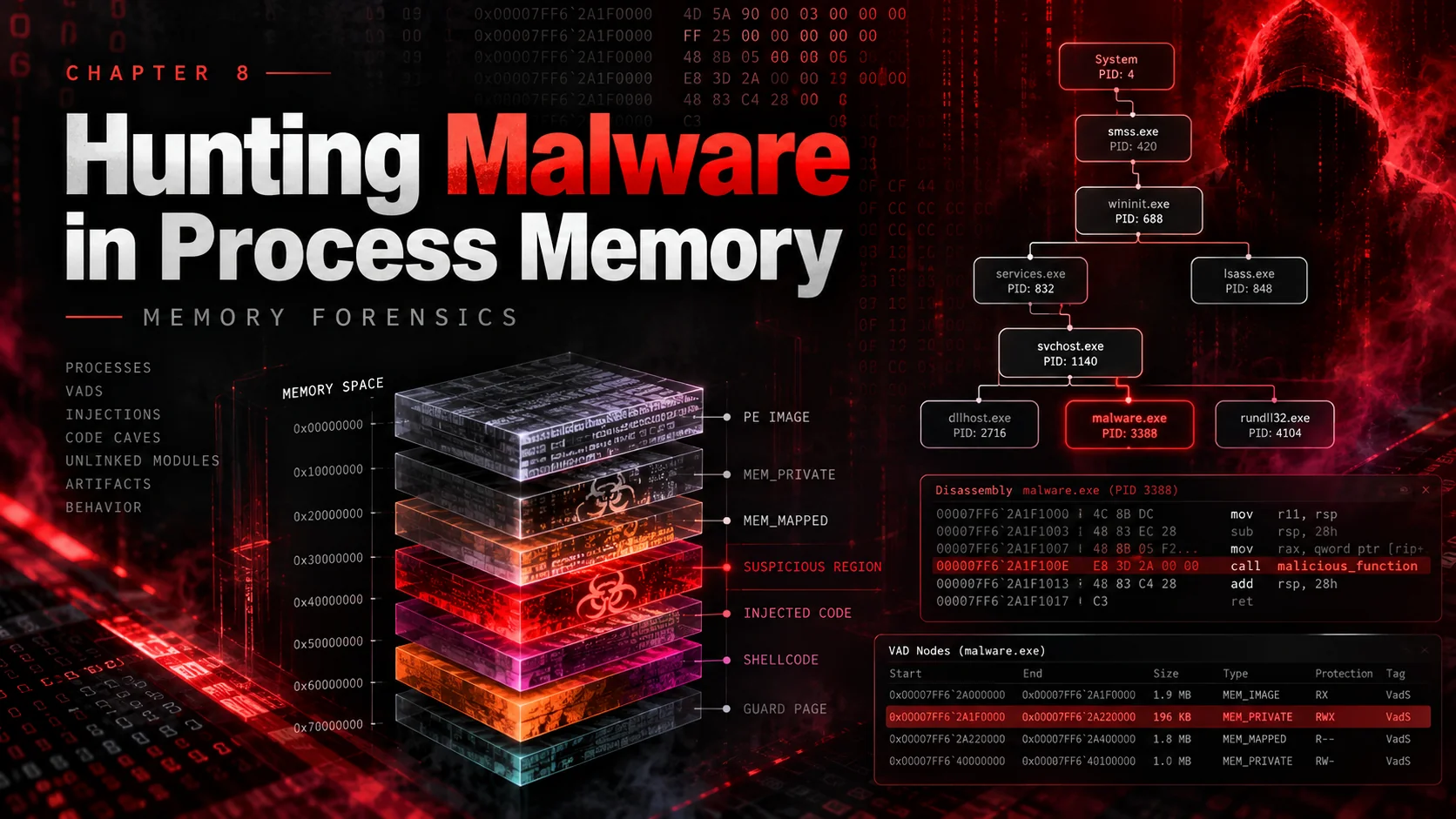
Explores Windows malware detection in process memory, covering PEB artifacts, suspicious DLLs, code injection, process hollowing and Volatility techniques for identifying hidden malware activity.
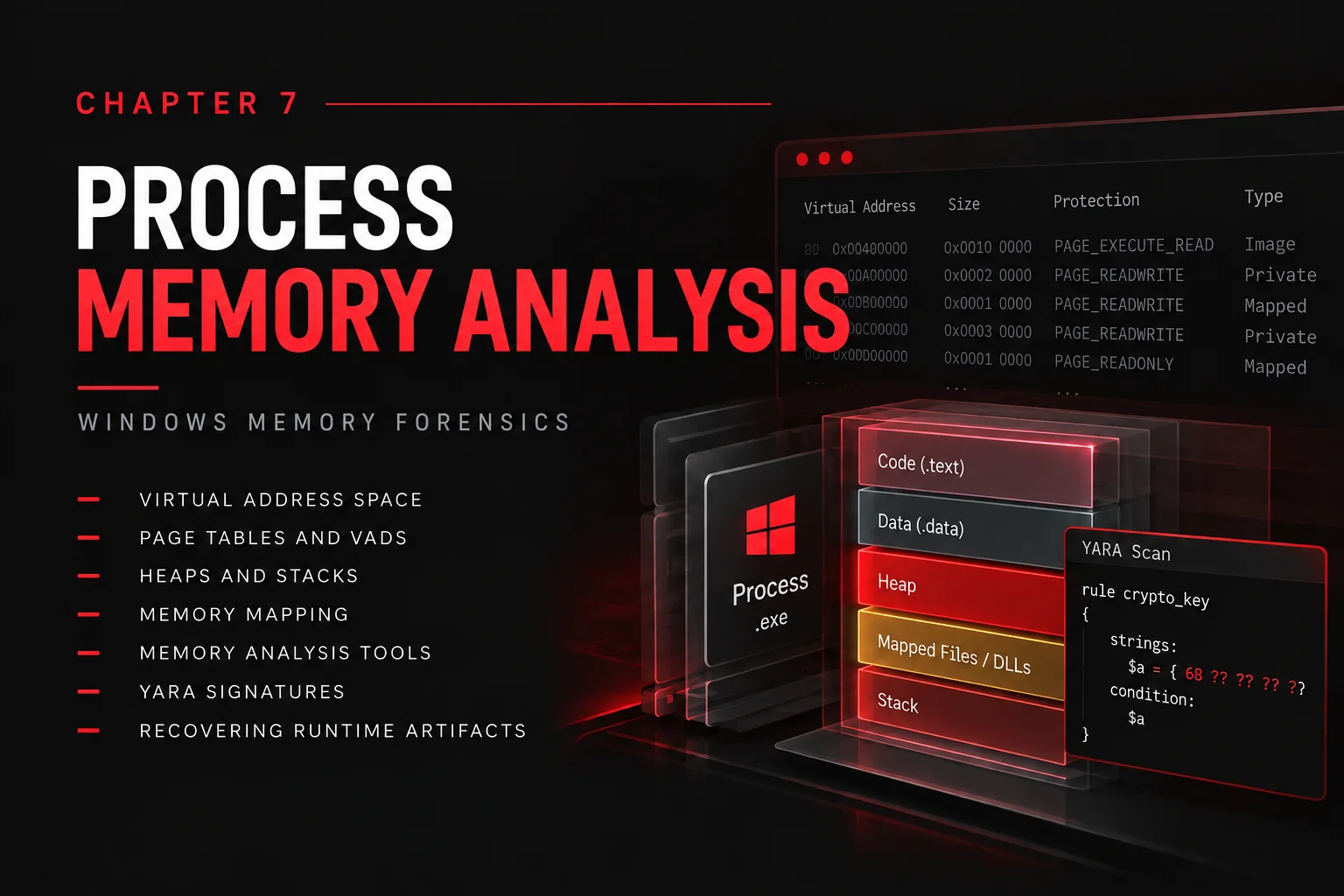
explores Windows process memory internals, including virtual address spaces, page tables, VADs, heaps, YARA scanning, and recovery of runtime artifacts such as passwords and encryption keys.
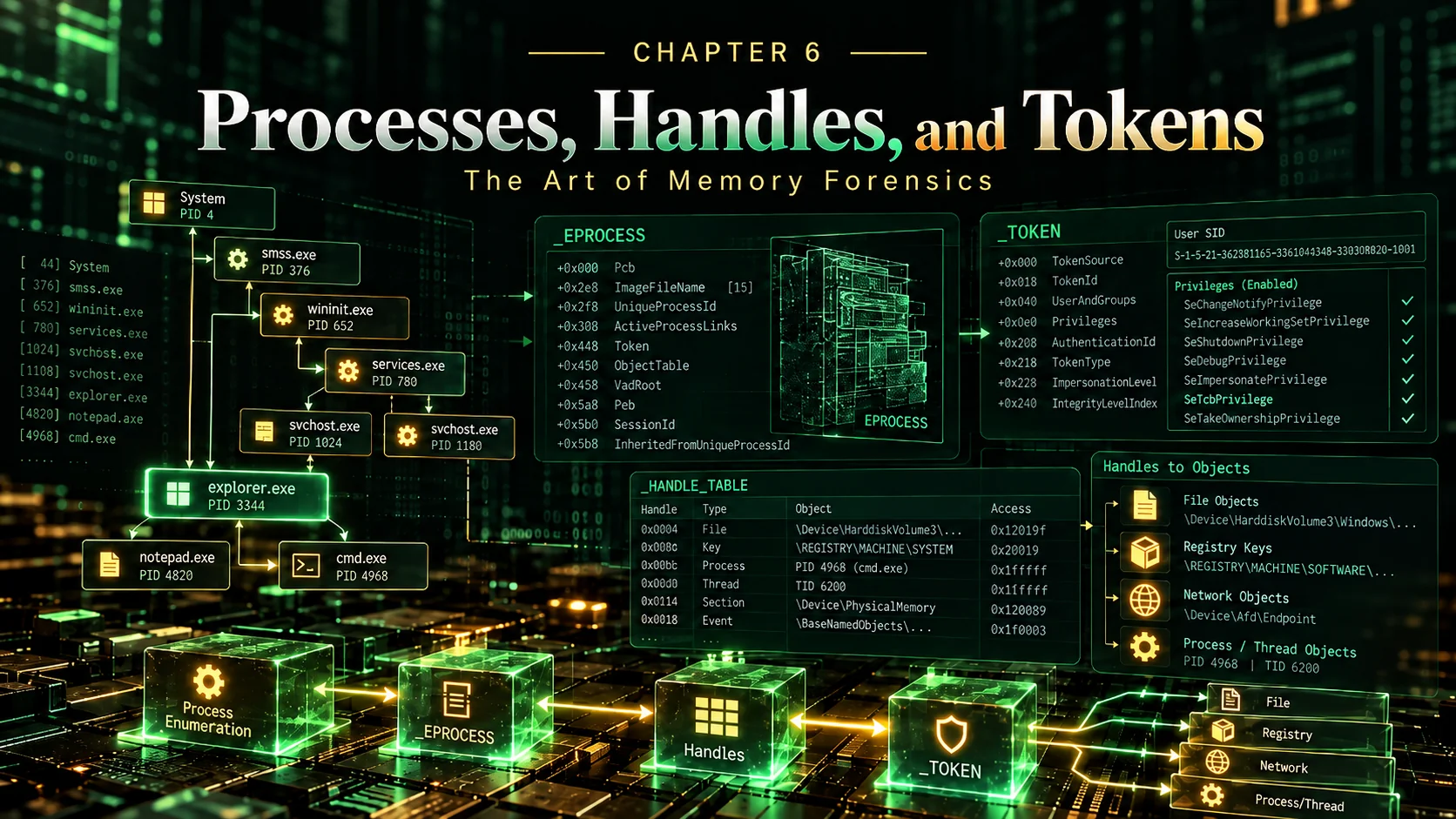
Brief notes summarizing Chapter 6 of The Art of Memory Forensics, focusing on process enumeration, tokens, SIDs, privileges, handles, DKOM, and process behavior analysis.
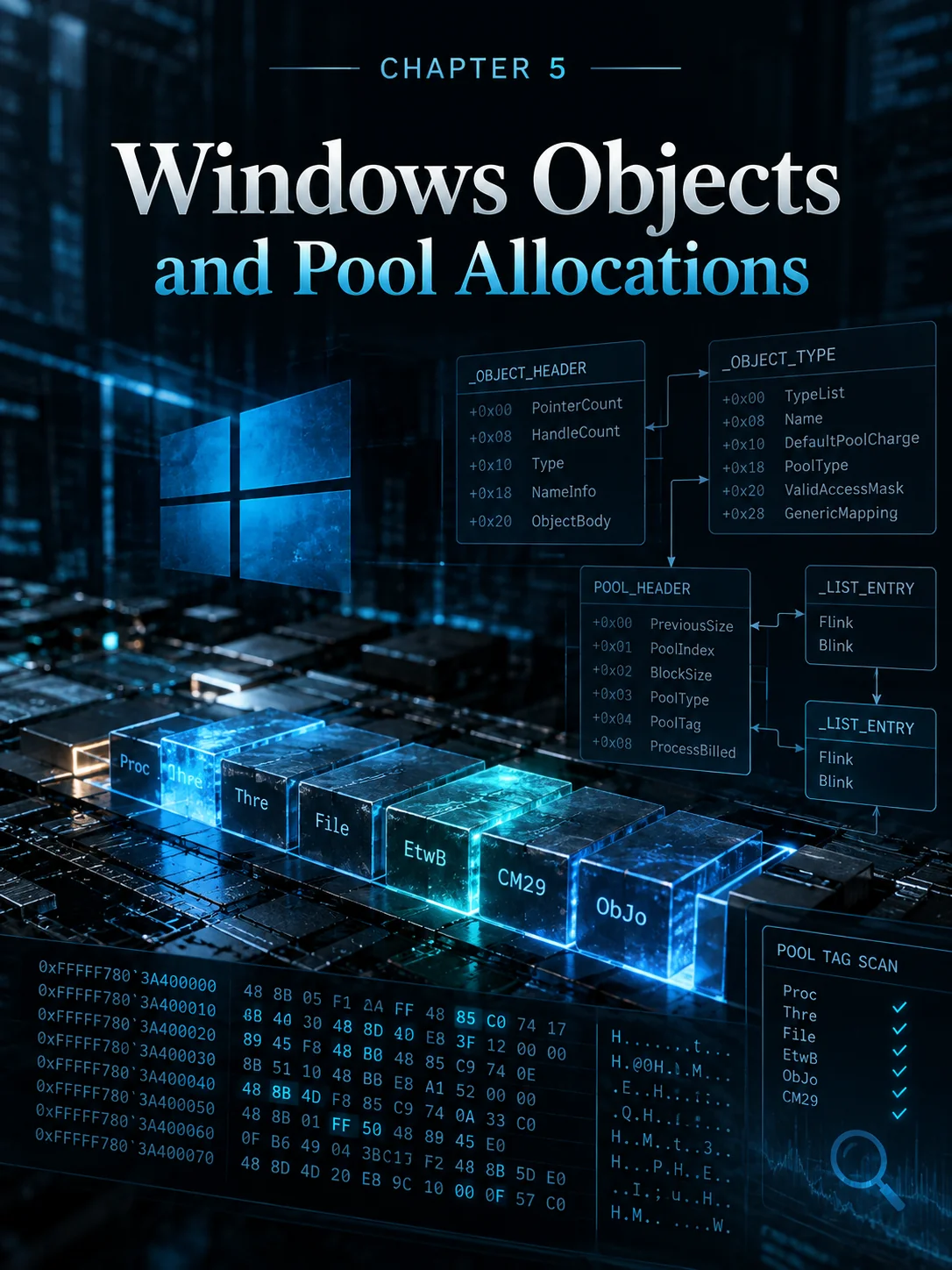
Brief notes summarizing Chapter 5 of (AMF), focusing on Windows objects, kernel pool allocations, pool tags, pool-scanning techniques, Big Page Pool analysis, and alternative methods for locating kernel objects.
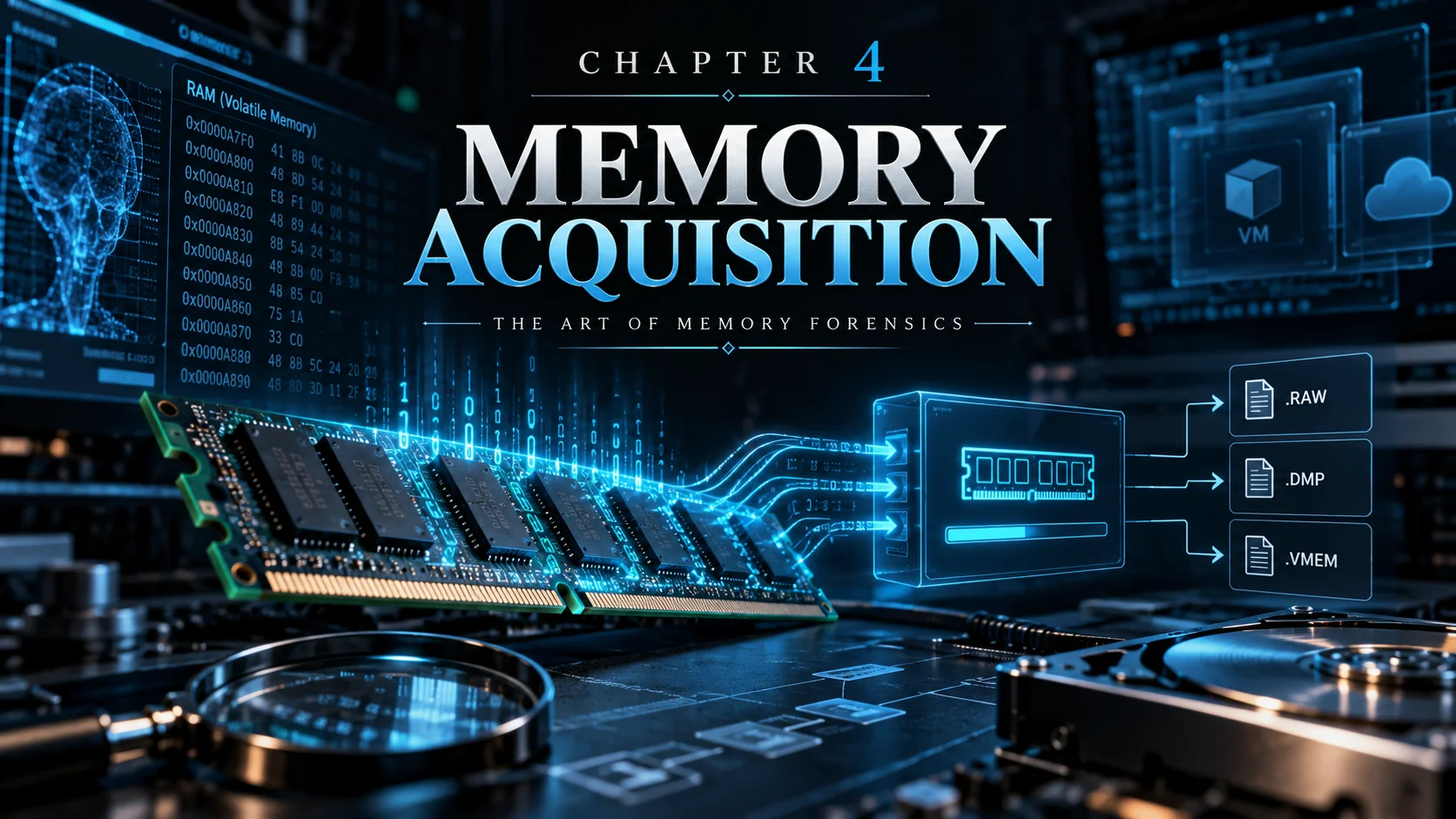
Brief notes summarizing Chapter 4 of The Art of Memory Forensics, focusing on memory acquisition methods, dump formats, virtual machine memory, memory conversion, and volatile evidence stored on disk.
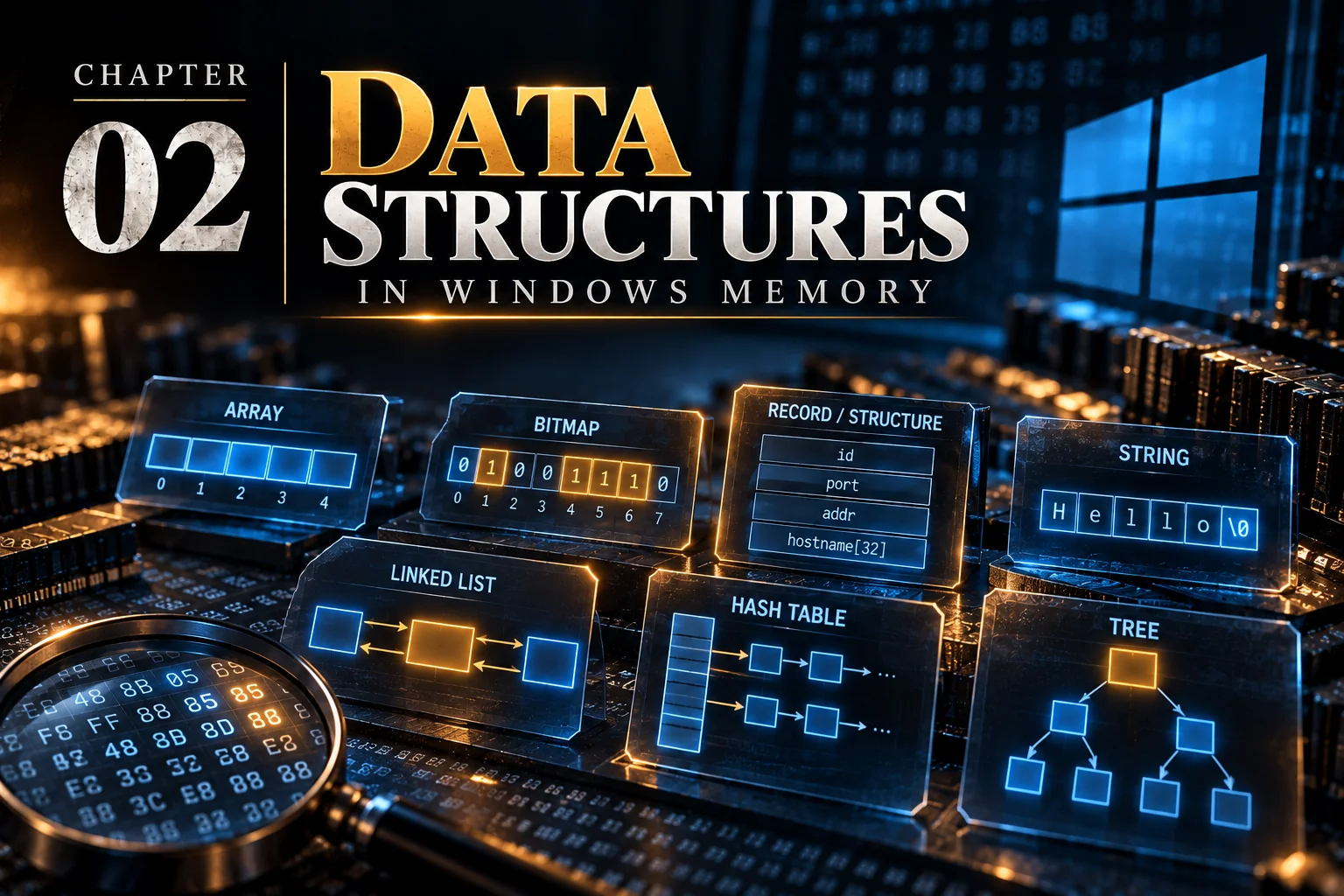
Brief notes summarizing Chapter 2 of The Art of Memory Forensics, focusing on different data structures, how they are organized and stored in memory, and how they are interpreted during memory analysis.
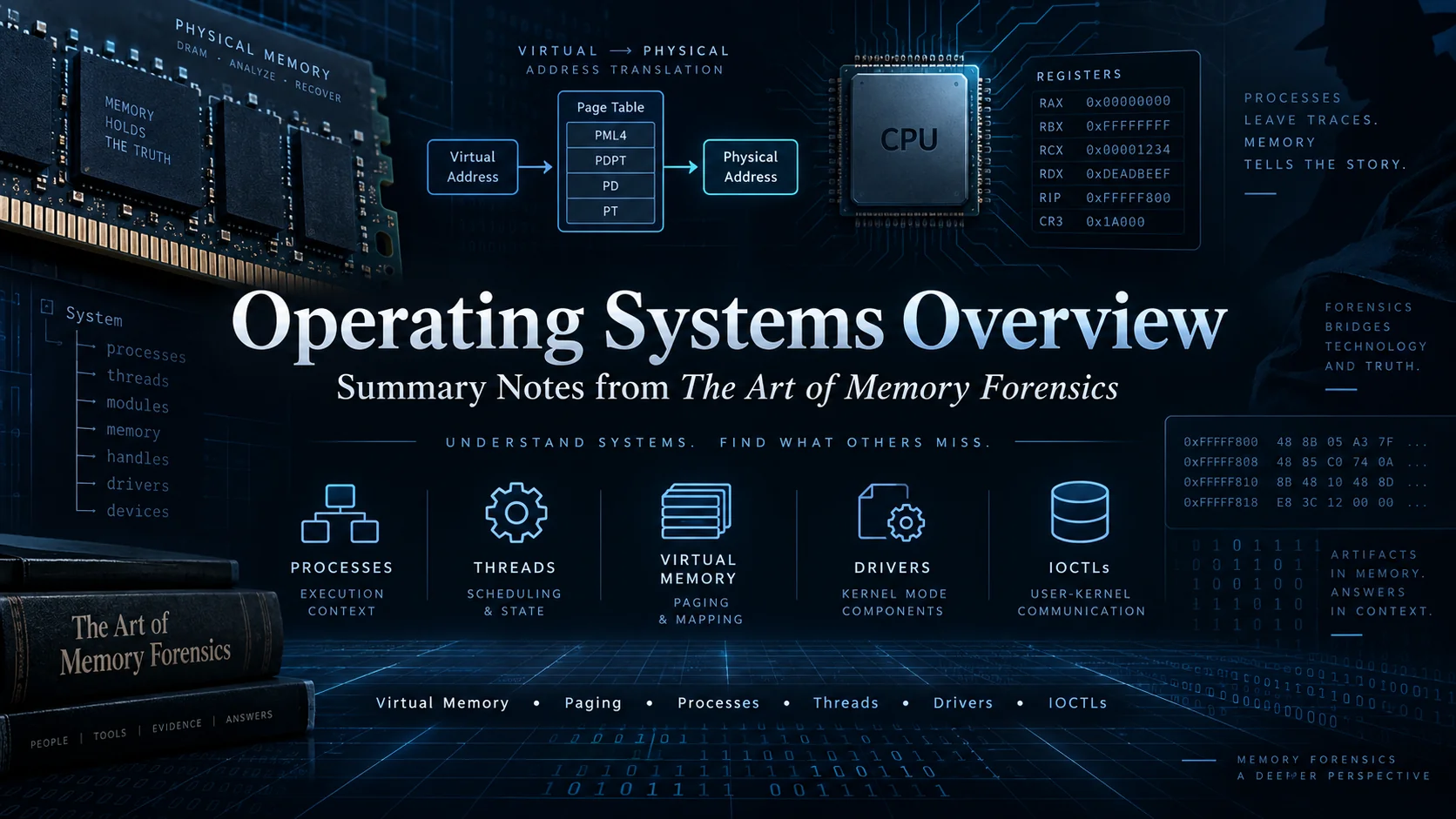
Brief notes summarizing Chapter 1 of The Art of Memory Forensics, with a focus on system overview and core operating system concepts.
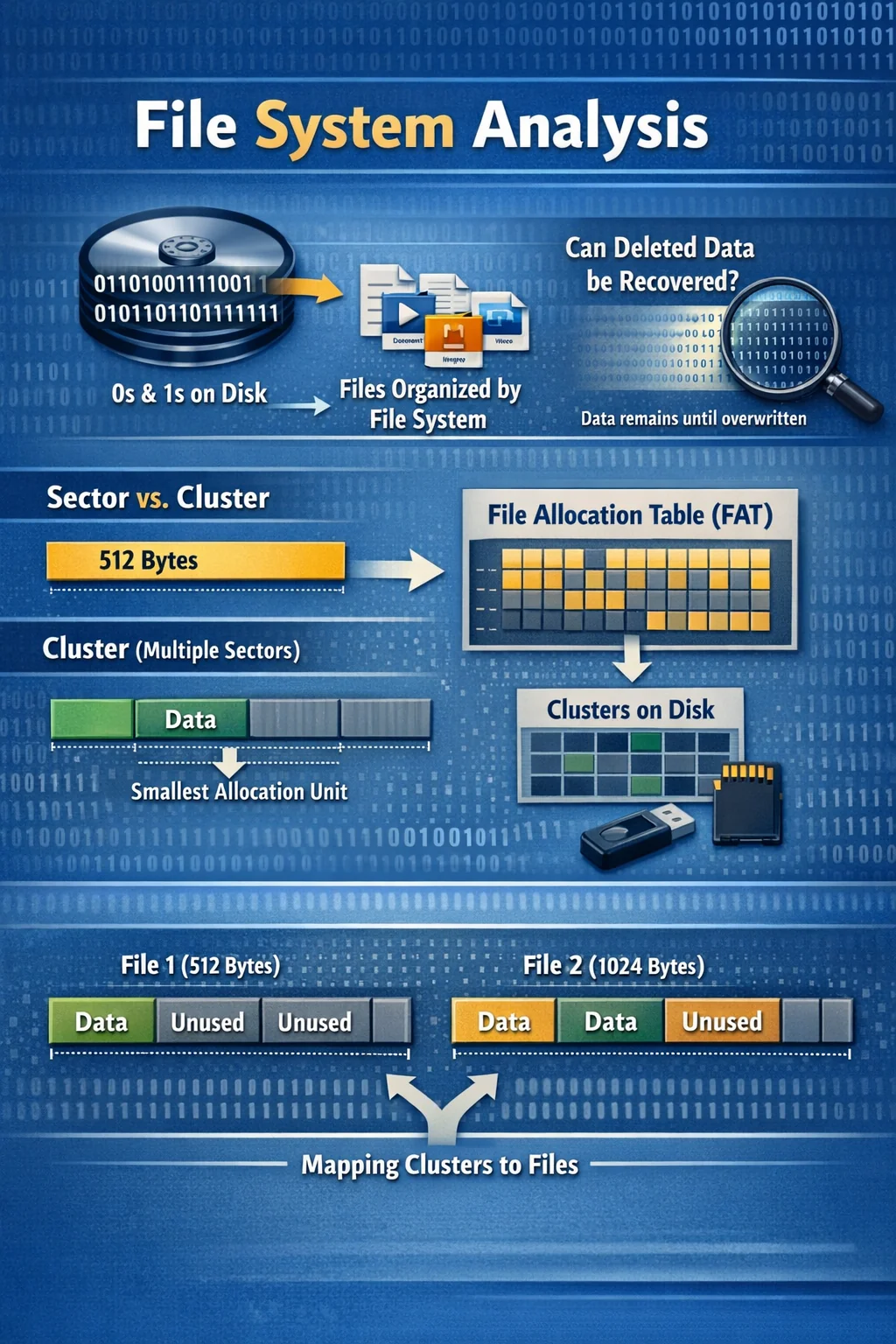
A concise guide to file system forensics, covering FAT and NTFS structures, deleted file recovery, file carving, and practical tools like SleuthKit, Autopsy, and PhotoRec.
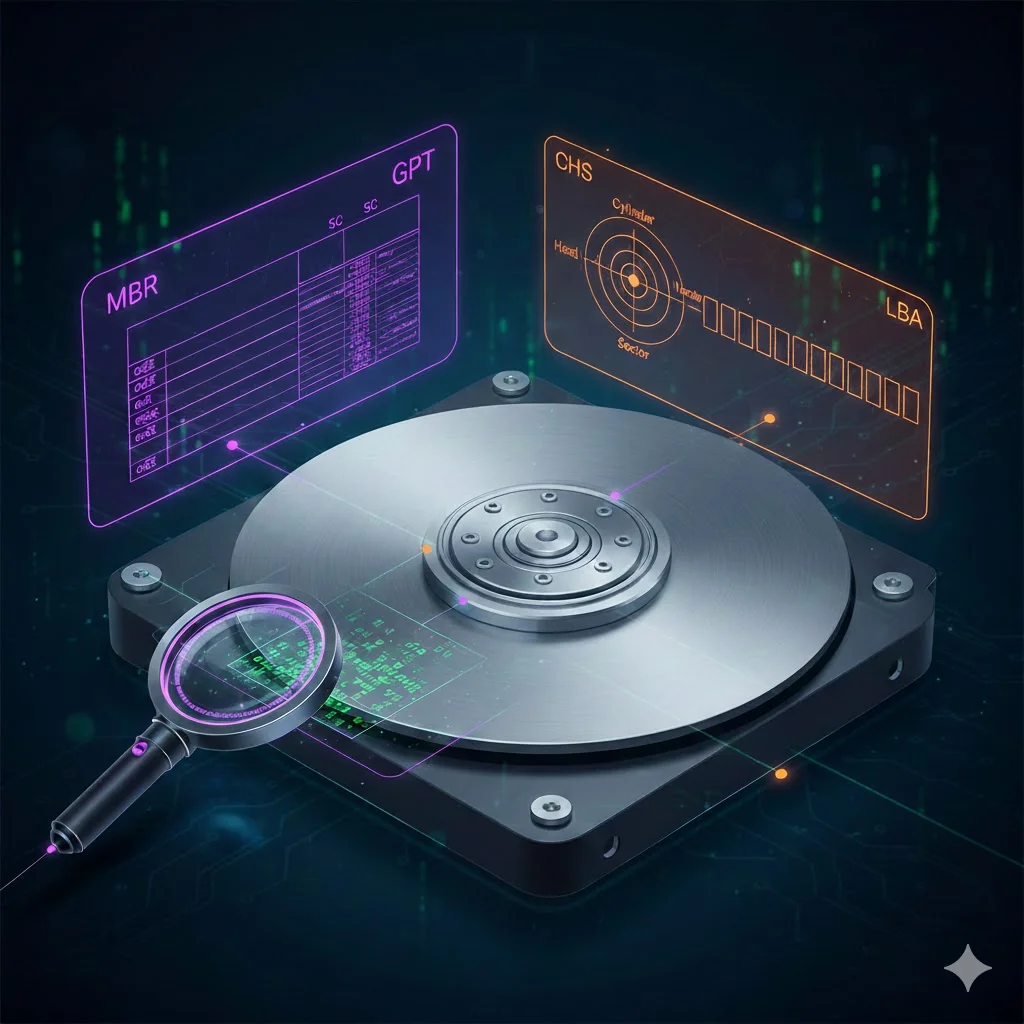
ECDFP notes covering disk forensics fundamentals, CHS/LBA addressing, MBR and GPT structures, boot records, and partition analysis with practical hex examples.
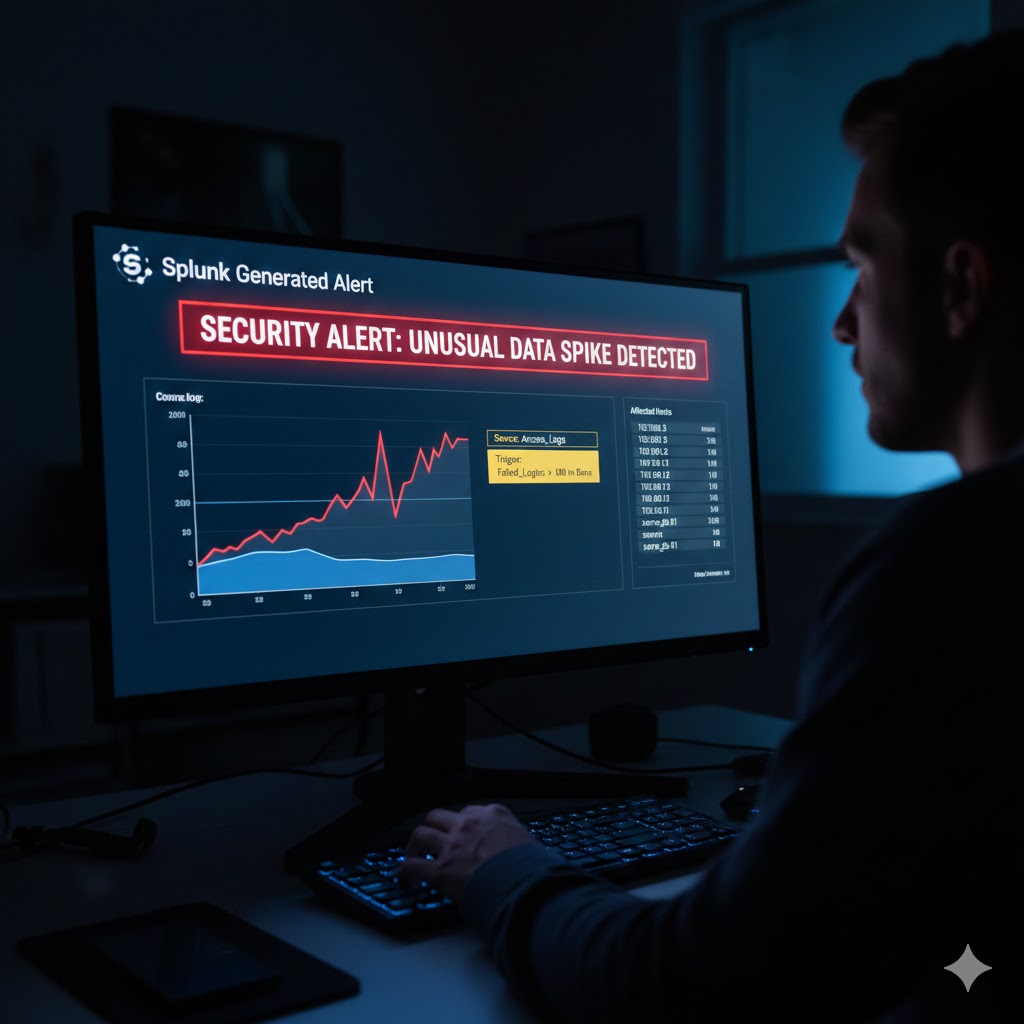
A practical SOC home lab guide to building Splunk detection rules and alerts for XSS, command injection, and SQL injection attacks.